
Last updated: September 29, 2026
Remote work has opened the door to jobs with companies in other countries — without relocating. A developer in Lahore can work for a startup in Berlin, a designer in Manila can serve clients in Toronto, and a customer support specialist in Nairobi can join a U.S. software company. But international remote jobs are also highly competitive, and the job market is full of scams.
This guide explains where to find legitimate international remote jobs, which roles are most in demand, how to stand out, how you’ll get paid, and how to avoid fraud.
What Is an International Remote Job?
An international remote job is a role with an employer or client based in another country, done entirely online. There are three common arrangements:
| Arrangement | How it works | Things to know |
|---|---|---|
| Independent contractor | You invoice the company for your work | Most common for international hires; you handle your own taxes and benefits |
| Employer of Record (EOR) | A third-party company, such as Deel or Remote.com, legally employs you on behalf of the foreign company | Can provide local contracts and some benefits |
| Freelance client work | You complete projects for clients through marketplaces or direct deals | More flexibility, but income can vary |
Always read the contract carefully so you understand your payment terms, working hours, and responsibilities.
“Remote” Doesn’t Always Mean “Anywhere”
Many remote jobs are limited to certain countries or time zones because of tax, legal, or collaboration requirements. Before applying, check the listing for phrases like:
- “Remote – worldwide” or “anywhere”: Open to applicants in most countries.
- “Remote – US only” or “EU only”: Restricted to specific countries.
- “Must overlap with EST/CET hours”: You can live anywhere but must work certain hours.
Filtering for worldwide roles saves time and avoids rejections based on location.
Where to Find International Remote Jobs
1. Remote.co

Remote.co lists remote jobs across fields such as IT, marketing, customer service, and writing, along with guides for remote workers. Check each listing’s location requirements, as many roles are open only to certain countries.
2. We Work Remotely

We Work Remotely is one of the best-known remote job boards, with roles in programming, design, customer support, sales, and marketing. You can filter by category and region, including “Anywhere in the World.”
3. LinkedIn

LinkedIn lets you filter jobs by “Remote” and connect directly with recruiters and hiring managers. A strong profile and regular, useful posts in your field can bring opportunities to you, not just through applications.
4. Wellfound (formerly AngelList Talent)

Wellfound focuses on startup jobs, many of them remote, and often shows salary ranges and equity upfront. It’s especially useful for tech, product, design, and marketing roles.
Other platforms worth exploring
- FlexJobs: Hand-screened remote and flexible jobs (paid subscription).
- Working Nomads and Himalayas: Curated remote job boards with location filters.
- Arc, Toptal, and Turing: Vetted networks that connect experienced developers and specialists with international companies.
- Upwork and Fiverr: Freelance marketplaces for project-based work — see our guide to websites for online jobs in Pakistan.
- Company career pages: Many “remote-first” companies post jobs directly on their own websites.
Most In-Demand International Remote Roles

| Role | Key skills | How to start |
|---|---|---|
| Software developer | JavaScript, Python, React, cloud platforms, Git | Build projects and a GitHub portfolio |
| Digital marketing specialist | SEO, paid ads, analytics, social media | Show measurable results from real campaigns |
| Customer support representative | Clear written English, empathy, help desk tools | Highlight communication skills and availability |
| Graphic or UI/UX designer | Figma, Adobe tools, design principles | Create a strong online portfolio |
| Content writer or editor | SEO writing, research, editing | Publish samples on a blog or portfolio site |
| Virtual assistant | Organization, email, scheduling, tools like Google Workspace | Start with small clients and collect testimonials |
| Data analyst | Excel, SQL, visualization tools | Share analysis projects using public data |
Interested in marketing? See digital marketing jobs in Germany and how to use the Meta Ad Library to win clients. Writers can read how to earn money online as a writer.
How to Stand Out and Get Hired
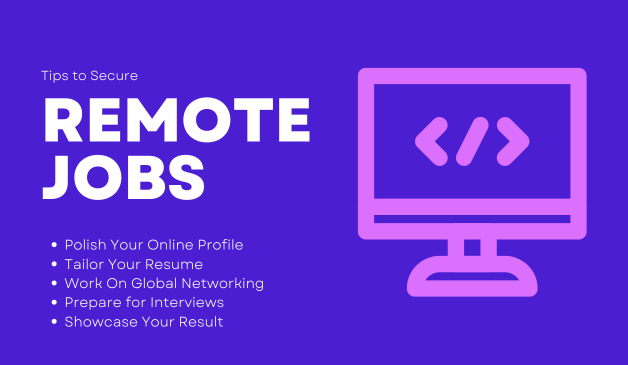
1. Build proof of your skills
International employers can’t meet you in person, so evidence matters. Create a portfolio, GitHub profile, writing samples, case studies, or certifications that show what you can do.
2. Optimize your LinkedIn profile
Use a clear headline that states your role and remote availability — for example: “Content Writer | SEO & B2B SaaS | Available for Remote Work (GMT+5).” Including your time zone helps recruiters.
3. Tailor every application
Adjust your resume and cover letter for each role. Mention remote-friendly skills: written communication, self-management, and experience with tools like Slack, Trello, Asana, or Notion.
4. Show results, not just duties
Instead of “Managed social media accounts,” write “Grew Instagram engagement by 40% in three months through a new content calendar.” Use real numbers from your own work.
5. Improve your written English
Remote teams communicate mostly in writing. Clear, concise messages are one of the strongest signals of a good remote hire.
6. Prepare for video interviews
Test your internet, camera, and microphone. Choose a quiet, well-lit space. Be ready for questions such as “How do you stay productive without supervision?” and “How do you handle communication across time zones?”
7. Start with freelance work if needed
If you lack international experience, smaller freelance projects can build your portfolio, reviews, and confidence before applying for full-time remote roles.
Getting Paid From Abroad
Before accepting a role, confirm how you’ll be paid. Common options include:
- Direct bank transfer to your local account
- Payoneer, widely used by freelancers in countries such as Pakistan
- Employer of Record platforms like Deel or Remote.com
- Other cross-border payment services, depending on your country
Compare fees and exchange rates, and check which services are available where you live. Keep records of all income for tax purposes — in Pakistan, IT and freelance exporters may benefit from specific tax rules and registrations, so check current guidance or speak with a tax advisor.
Challenges of International Remote Work (and Solutions)
- Time zones: Agree on overlap hours and use tools like Google Calendar with time zone settings.
- Isolation: Join online communities and schedule regular video calls with colleagues.
- Unreliable internet or power: Keep a backup internet connection and a UPS or power backup.
- Blurred work-life boundaries: Set fixed working hours and a dedicated workspace.
- Staying visible: Share regular progress updates so your work is noticed.
How to Spot Remote Job Scams
Scammers target remote job seekers with fake offers designed to steal money or personal information. Watch for these red flags:
- Any request for payment. Legitimate employers do not charge you for training, equipment, software, or “registration.” If a company asks you to pay before or after you start, it’s almost certainly a scam.
- Checks for equipment. A common scam sends you a check to “buy equipment,” then asks you to return part of the money before the check bounces.
- Interviews only by chat app with no video call or official email address.
- Unusually high pay for simple tasks, like liking videos or reviewing products.
- Requests for sensitive information — bank passwords, ID photos, or OTP codes — early in the process.
- Vague job descriptions and no verifiable company website or employees.
- Pressure to act immediately.
Always verify the company independently — check its official website, LinkedIn page, and employee profiles, and apply through official channels where possible.
Frequently Asked Questions
Can I get an international remote job from Pakistan?
Yes. Many Pakistani professionals work remotely for international companies, especially in software development, design, marketing, writing, and customer support. Look for roles open worldwide or in your time zone, and make sure you have a reliable way to receive payments.
Do I need a degree to get a remote job?
Not always. Many remote employers care more about skills and a portfolio than formal degrees, especially in tech, design, and content roles.
Are international remote jobs well paid?
Pay varies widely by role, company, and experience. International roles can pay more than local jobs in some countries, but competition is strong.
How long does it take to find a remote job?
It can take weeks or months. Applying consistently, improving your portfolio, and networking all speed up the process.
Final Thoughts
International remote jobs offer access to global opportunities, flexible work, and the chance to grow your career without relocating. Focus on in-demand skills, build clear proof of your work, apply through reputable platforms, and learn to communicate well in writing. Just as important, stay alert to scams — a real employer will never ask you to pay to get hired.
Looking for other ways to earn online? See online tutoring jobs for teens and students and realistic passive income ideas. If you have questions, feel free to contact us.