
Last updated: September 29, 2026
Online tutoring is one of the most popular ways for students to earn money while building useful skills. If you’re good at a subject — math, science, English, a language, coding, or exam preparation — you can help others learn and get paid for it, often from home and on a flexible schedule.
However, there’s one important fact many articles skip: most major tutoring platforms require tutors to be at least 18 years old. That doesn’t mean teenagers can’t tutor, but the path is different. This guide explains your realistic options by age, the platforms worth considering, how to get started, how much tutors typically earn, and how to stay safe.

What Is Online Tutoring?
Online tutoring means teaching or supporting a student over the internet using video calls, chat, shared whiteboards, and documents. Common types include:
- One-on-one tutoring: Personalized lessons for a single student.
- Group tutoring: Small groups studying the same subject or exam.
- Homework help: Short sessions to explain specific problems.
- Test preparation: Help with exams such as O/A Levels, matric and intermediate board exams, SAT, IELTS, or university entrance tests.
- Skill-based tutoring: Coding, music, art, or language conversation practice.
Online Tutoring Options by Age
| Age group | Realistic options | Notes |
|---|---|---|
| Under 18 (teens) | Tutoring family friends, neighbors, and younger students; school peer-tutoring programs; volunteer tutoring programs | Most commercial platforms require tutors to be 18+. Involve a parent or guardian. |
| 18+ students | Major tutoring marketplaces and language platforms, plus independent tutoring | Platforms may require ID verification, subject tests, or proof of enrollment. |
| University students and graduates | Subject tutoring, exam preparation, and higher-paying specialist tutoring | Degrees, strong grades, or certifications can help you charge more. |
Options for Teens (Under 18)
1. Tutor younger students you know
Many teens start by helping younger siblings of friends, neighbors’ children, or family members. Lessons can happen online over video calls, with a parent aware of the arrangement. Word-of-mouth referrals can quickly grow a small tutoring business.
2. Join your school’s peer-tutoring program
Many schools run programs where older students help younger ones. These may be paid, voluntary, or count toward community service — and they’re excellent experience for future tutoring roles and university applications.
3. Volunteer with tutoring programs
Some nonprofit and volunteer platforms accept high school tutors, sometimes with minimum ages, training, or parental consent. Volunteer tutoring won’t pay, but it builds experience, confidence, and references.
4. Create study resources
Teens who are strong in a subject can create notes, practice questions, or explanation videos — with a parent’s help to manage any accounts or sales.
Best Online Tutoring Platforms for Students 18+
Requirements, pay, and fees change, so always check each platform’s current rules before applying.
| Platform | Best for | How it works |
|---|---|---|
| Wyzant | Academic subjects and test prep | Tutors create profiles and set their own rates; the platform takes a commission |
| Tutor.com | On-demand academic help | Requires applicants to meet education and subject requirements, typically including college enrollment or a degree |
| Preply | Languages and academic subjects | Tutors set their own rates and teach students worldwide; the platform takes a commission |
| Cambly | English conversation practice | Tutors chat with English learners; requirements and pay vary by program |
| italki | Language teaching | Community tutors and professional teachers set their own prices |
| Superprof | Many subjects, local and online | Tutors list services and connect with students directly |
| Fiverr and Upwork | Specialized help and freelance-style lessons | Tutors offer packages and set their own prices |
Note: Chegg Tutors, which many older articles still recommend, closed its tutoring service several years ago.
Tutoring from Pakistan
Pakistani students and graduates tutor both locally and internationally. Popular areas include English, mathematics, science, O/A Level subjects, Quran and Arabic lessons, and Urdu for overseas families. Many tutors find students through platforms, Facebook groups, WhatsApp, and referrals. Before choosing a platform, check how it pays tutors and whether that payment method works in Pakistan.
How to Get Started as an Online Tutor
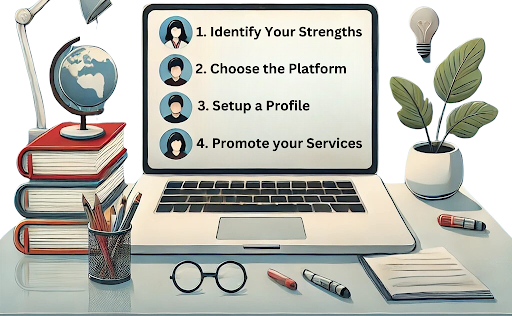
Step 1: Choose your subjects and level
Pick subjects you know well and enjoy explaining. It’s usually best to tutor students a few levels below your own — for example, a university student tutoring secondary school math.
Step 2: Set up your equipment
- A laptop or computer with a working camera and microphone
- Reliable internet (and a backup option if possible)
- A quiet, well-lit space
- Tools such as Zoom or Google Meet, a digital whiteboard, and Google Docs
Step 3: Create a strong profile
- A friendly, professional photo
- Clear subjects, levels, and exam boards you teach
- Your qualifications and grades
- Your teaching approach and availability
- A short intro video, if the platform allows it
Step 4: Plan your first lessons
Start with a short assessment to understand the student’s level and goals. Prepare practice questions, explain concepts step by step, and end each session with a quick summary and next steps.
Step 5: Collect reviews and referrals
Reviews are essential on tutoring platforms. Ask satisfied students or parents to leave feedback and recommend you to others.
How Much Can Online Tutors Earn?
Earnings vary widely depending on:
- The subject (specialist subjects and exam prep usually pay more)
- Your qualifications and experience
- Where your students are located
- Platform commissions and fees
- Whether you tutor independently or through a marketplace
New tutors usually start with lower rates to build reviews, then raise prices as demand grows. Tutoring students in higher-income countries often pays more than local tutoring, but competition is also higher. Independent tutoring avoids platform fees but requires you to find your own students.
Tips to Keep Students Engaged
- Learn how they learn: Some students prefer visuals, others need practice problems.
- Connect lessons to real life and their interests.
- Set small, achievable goals for each session.
- Ask questions instead of lecturing, so students think actively.
- Celebrate progress to build confidence.
- Share progress with parents when tutoring younger students.
Staying Safe and Professional
- Teens should always involve a parent or guardian in arranging lessons, payments, and communication.
- Keep communication professional and use platform messaging or family channels where possible.
- Protect personal information — don’t share your home address, passwords, or financial details.
- When tutoring minors, keep sessions visible to parents, avoid private social media contact, and follow the platform’s safeguarding rules.
- Watch for scams, such as “students” who send overpayments and ask for refunds. See our guide to spotting remote job scams.
- Protect your accounts with strong passwords and two-factor authentication.
Does Tutoring Count as Community Service?

Unpaid, volunteer tutoring through a school or recognized organization often counts as community service. Paid tutoring usually does not. If you need service hours for school or university applications, check with your school about which programs qualify.
Frequently Asked Questions
Can a 15- or 16-year-old become an online tutor?
Yes, but usually not through major commercial platforms, which typically require tutors to be 18 or older. Teens can tutor family friends and younger students with parental involvement, join school programs, or volunteer.
Do I need a degree to tutor online?
Not always. Some platforms accept students with strong subject knowledge, while others require college enrollment or a degree. Specialist and exam-prep tutoring often benefits from higher qualifications.
What subjects are most in demand?
Math, science, English, test preparation, languages, and coding are consistently popular.
How do I get my first students?
Start with people you know, offer a trial session, collect reviews, and build a profile on one platform before expanding.
Can I tutor international students from Pakistan?
Yes. Many Pakistani tutors teach students abroad through platforms and referrals. Make sure the platform supports payments to your country.
Final Thoughts
Online tutoring is a flexible, rewarding way for students to earn money and build communication, leadership, and teaching skills. Teens can start by tutoring people they know, joining school programs, or volunteering, while students aged 18 and over can join established platforms or tutor independently. Choose subjects you know well, create a professional profile, focus on helping your students succeed, and stay safe along the way.
Looking for more ways to earn online? Read how to earn money online as a writer and websites for online jobs in Pakistan.